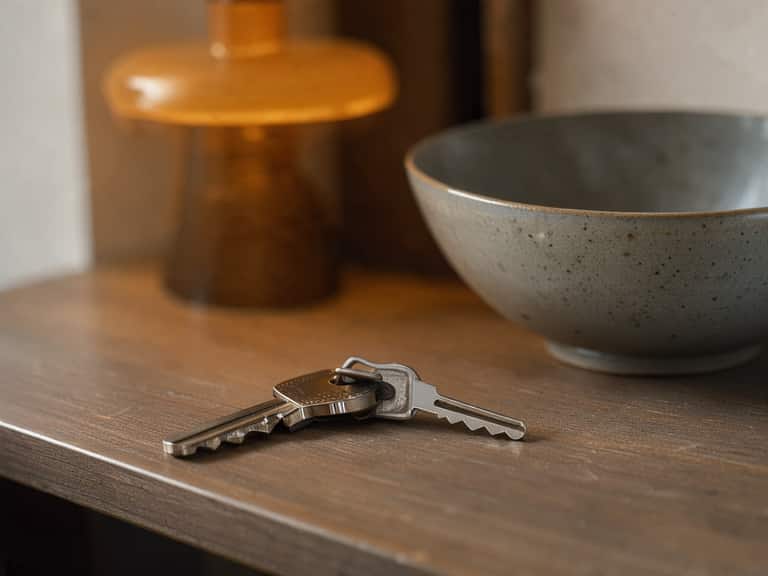
The Gap Between Being There and Actually Arriving
Most of us don't decide to be distracted. It just happens. You finish work, drive home, walk in the door — and your mind is still somewhere else entirely. A half-finished email. A conversation that didn't go the way you wanted. A list of things you haven't done yet.
Your partner sees you. They might even hug you. But somewhere underneath the hello, they can sense that the most important part of you hasn't quite arrived yet.
This article isn't about listening skills or putting your phone down — you've heard that advice. This is about something that happens before all of that: the quiet, intentional act of transitioning into presence before you engage with the person you love.
---
Why Transitions Matter More Than You Think
Researchers who study emotional availability — how fully one person can be reached by another — have found that it isn't just about what you do in a conversation. It's about the internal state you bring into it.
When you're mentally cluttered, your nervous system is still oriented toward solving problems elsewhere. Your responses become shorter. Your eye contact is there, but hollow. You nod, but you're not really tracking. And your partner, even if they can't name it, feels the difference between your body being present and you being present.
The gap between those two things is where a lot of quiet disconnection lives.
The Transition Ritual
Therapists sometimes call this concept decompression — a deliberate buffer between one context and another. Athletes use versions of it before big moments. Surgeons do it. And you can bring it into your relationship without it feeling clinical at all.
The idea is simple: before you cross the threshold into shared time with your partner, give yourself a few minutes to consciously close the mental tabs from your other life.
Here's what that might look like in practice:
- Name what you're carrying. Sit in your car for two minutes before going inside. Not to scroll — just to ask yourself: What's still running in my head? Name it. A difficult meeting, a nagging worry, a task undone. You don't have to solve it. Just acknowledge it so it stops pulling at you from the background.
- Give it a temporary home. Tell yourself — out loud if it helps — I'll come back to this later. Research on cognitive offloading suggests that even this small act of mental filing can reduce the mental intrusion of unfinished thoughts.
- Do something physical to mark the shift. Change your clothes. Wash your hands slowly. Take five deep breaths. The physical ritual signals to your brain that you're moving from one mode to another. It sounds small. It works.
What You're Really Doing
When you tune in before you show up, you're doing something quietly profound: you're treating your partner as someone who deserves your actual attention, not just your physical proximity.
This matters more than most people realize. Perceived partner responsiveness — the feeling that your partner is genuinely tuned into you — is one of the strongest predictors of relationship satisfaction and emotional security. It's not built through grand gestures. It's built in the small, ordinary moments when someone looks at you and you can feel that they're actually there.
You can't manufacture that feeling. But you can create the conditions for it.
When You're Already Home
Transitions don't only happen at the front door. They happen when you close your laptop after working from home. When you put the kids to bed and turn toward each other for the first time all evening. When a difficult week finally ends.
In all of these moments, the same principle applies: don't just shift locations — shift states.
A simple question can help: Am I actually here right now, or am I just nearby? If the honest answer is nearby, that's not a failure. It's just useful information. Take a breath. Let the other context go for now. Choose, consciously, to arrive.
Start Tonight
You don't need to overhaul anything. Just try this once:
Before your next real interaction with your partner — dinner, a conversation, sitting down together after a long day — pause for sixty seconds. Name what you're still carrying from the day. Mentally set it aside. Then walk in.
Notice whether something feels different. Not dramatically. Just slightly warmer, slightly more real.
That slight difference, practiced over time, becomes the texture of a relationship where both people feel genuinely met. And that feeling — of being truly received by someone who chose to arrive for you — is one of the best things a partnership can offer.

