The Hour That Holds Everything Together
Most couples don't lose each other in dramatic moments. They lose each other in the accumulation of rushed weeks, full calendars, and days that end before they've really begun. What tends to hold couples together isn't grand gestures — it's small, protected pockets of time that say, without words: this matters more than the to-do list.
Saturday mornings — or any slow morning you can claim together — offer something genuinely rare: unscheduled time before the day makes its demands. Research on relationship satisfaction consistently points to shared leisure time as one of the strongest predictors of long-term closeness. Not just time in the same room, but time that feels unhurried, mutual, and low-stakes.
The couples who do this well aren't doing anything elaborate. They're just doing it consistently.
What Makes a Morning Ritual Different
There's a meaningful difference between spending time together and having a ritual. A ritual has a shape — a loose sequence that you both recognize and return to. It signals: we're in this mode now. That predictability is part of what makes it work.
From a psychological standpoint, rituals reduce what researchers call relational ambiguity — the low-grade uncertainty about where you stand with your partner. When Saturday morning feels like yours, it creates a kind of emotional scaffolding. The week can be hard. Work can be stressful. But Saturday morning is there, and you both know it.
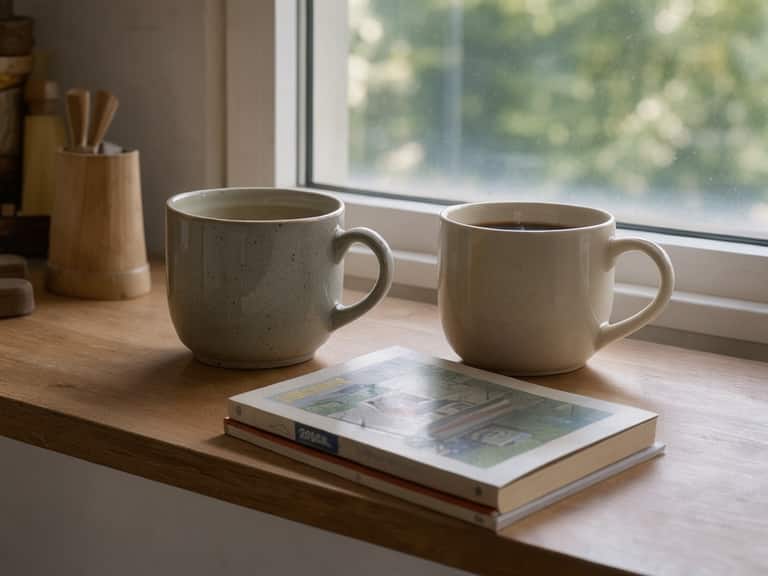
The content of the ritual matters less than the consistency of it. Some couples make a specific breakfast together. Some walk the same route through the neighborhood. Some read in the same room, occasionally sharing a sentence or two. What it looks like is yours to decide. What it does is create a touchstone.
Building Your Morning Without Overthinking It
If you've never had a weekend morning ritual, or it's drifted away, here's how to rebuild one without forcing it:
Start with what already exists. Maybe one of you always makes coffee. Maybe you both end up on the couch before noon on Saturdays anyway. Look for the natural seeds of a ritual before you plant anything new. Existing habits are easier to build on than invented ones.
Protect it before you plan it. Decide, together, that this time is not available for errands, screens-for-distraction, or housework — at least not for the first hour. The boundary creates the space. The space creates the ritual.
Keep it low-effort to sustain. One of the most common mistakes couples make is designing a ritual so elaborate it becomes a burden. A beautiful, leisurely Saturday morning doesn't need a grocery run the night before. It just needs agreement that you'll be present for it.
Let it be quiet sometimes. Not every shared ritual needs conversation to count. Parallel presence — being near each other without agenda — is its own form of intimacy. Some of the most bonded couples I've worked with describe mornings where they barely spoke, but felt deeply close. The absence of pressure is the connection.
When Life Gets in the Way
Kids, work schedules, travel, and the general unpredictability of adult life will interrupt your ritual. That's not failure — that's life. The question is whether you return to it when the disruption passes.
Couples who maintain strong rituals over years aren't the ones who never miss a week. They're the ones who notice when they've missed a few and say, let's get back to it. That act of returning is itself an expression of care.
If Saturday mornings genuinely don't work, the ritual can live elsewhere — a Sunday walk, a weeknight half-hour with the phones down, a Friday night with a specific low-key structure you both look forward to. The day doesn't matter. The intention does.
What You're Really Building
When couples describe what they miss most about earlier, easier times in their relationship, they rarely mention specific conversations or events. They describe a feeling — of ease, of being chosen, of time that belonged to both of them.
A slow morning ritual is one of the most practical ways to keep generating that feeling across years and decades. It doesn't solve conflict. It doesn't replace deeper work when deeper work is needed. But it creates a relational baseline — a steady, warm undercurrent that makes everything else a little more navigable.
You don't need a perfect morning. You need a recurring one.
This week, look at your weekend and find one hour you can agree to protect. Don't plan too much for it. Just show up to it, together, and see what it quietly becomes.

