When the Change Decides Who You Are
Somewhere between signing the lease together and unpacking the last box, something shifts. You're not just a person navigating a new situation — you've become the organized one, or the worrier, or the one who holds it all together. Nobody said so out loud. But somehow, the role is yours now.
This is one of the quieter costs of big life transitions: they don't just change your circumstances, they reassign your function. And when that happens without any real conversation, couples can find themselves locked into dynamic patterns that feel permanent — even when nobody consciously chose them.
The good news is that what gets assigned without conversation can be renegotiated with one.
How Roles Get Written in Silence
During transitions — moving in together, getting married, becoming parents, navigating loss — couples naturally fall into a kind of division of labor that's less about fairness and more about whoever acted first. One person calls the moving company once, and suddenly they're the logistics person. One person cries at the hospital, and quietly becomes the emotional one, while their partner learns to stay steady and gets labeled the stoic one.
Researchers who study couple identity during stress call this role rigidity — the way that high-pressure moments cause fluid personalities to harden into fixed characters. What starts as adaptive (someone has to make decisions fast) becomes calcified (that person always makes the decisions, even when the crisis is over).
Neither partner usually notices it happening. But over time, each person starts performing their assigned role rather than living as their full self.
The Cost of Playing a Character
Roles aren't inherently bad. Knowing who does what can reduce friction and build stability — especially during the chaos of a major life change.
The problem arrives when the role stops fitting but nobody feels like they can say so.
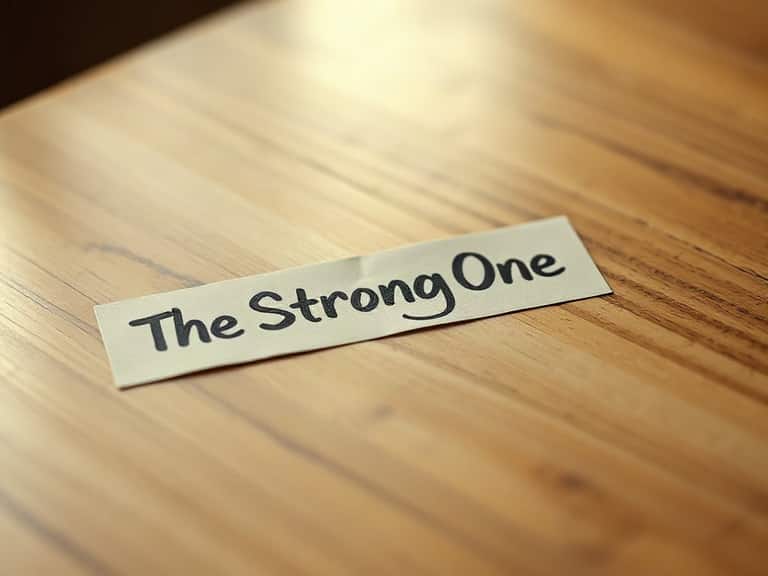
The person who became the strong one after a loss might be desperate to fall apart a little — but fears that if they do, everything will collapse. The person who became the planner during a move might be exhausted and resentful, but they picked up the role, so how do they put it down without seeming irresponsible?
This is where role fatigue quietly poisons connection. Instead of two full humans navigating a shared life, you have two people performing functions for each other. Intimacy requires seeing and being seen — and it's very hard to be seen when you're in costume.
Three Signs a Role Is Running the Relationship
- You feel like your partner only needs what you do, not who you are. You're valued for your function — the calming one, the earner, the one who calls the pediatrician.
- You edit yourself to stay in character. You don't mention your fear because that's not your role. You don't express the preference because the other person is the one with opinions now.
- Resentment shows up in strange places. You're not angry about anything specific — you're just tired of being this version of yourself.
Reclaiming Yourself — Together
The goal isn't to abandon all structure or pretend roles don't exist. It's to make them chosen and revisable rather than inherited and permanent.
Start with a gentle audit. Separately, each of you writes down what roles you feel you've taken on since the transition. Then compare. What was conscious? What just... happened? Often, just naming the pattern out loud removes some of its power.
Try the phrase: "I've been playing the _____ in this, and I'd like to share that more." This is less threatening than "you always make me do this" and opens a collaborative door rather than a defensive one.
Allow each other one role reversal per week. If one person has become the default emotional processor, let the other hold that space for a single conversation. If one person always manages the calendar, hand off one scheduling task entirely. These small experiments build the neural and emotional proof that both people are capable of more than their assigned lane.
Check in at transition milestones. Three months after moving in, six months into new parenthood, a year after a loss — pause and ask: Are we still the people we want to be in this relationship, or have we become the people this situation made us?
The Person Underneath the Role
Every big life change asks something of you. That's unavoidable. But the healthiest couples find a way to let their circumstances shape them without letting those circumstances define them entirely.
You are not just the function you serve in a moment of transition. You are still the full, complicated, changing person your partner fell for. So are they.
Reclaiming that — naming it, negotiating it, protecting it — is not a sign that the relationship is struggling. It's a sign that it's alive.

