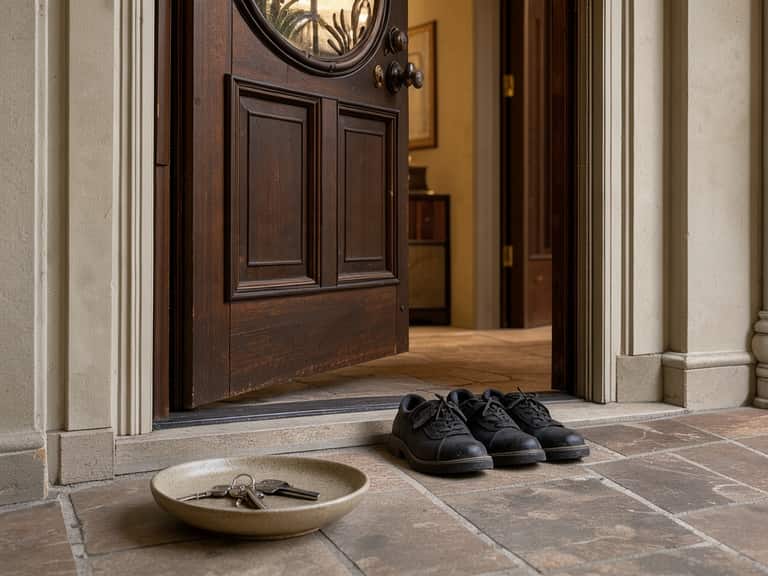
The Moment Most Couples Overlook
Most couples have thought carefully about morning routines. Fewer have thought about the re-entry moment — that first minute or two when one or both of you crosses the threshold at the end of the workday.
It seems unremarkable. Someone walks in. Bags get dropped. Maybe the TV goes on, or a phone stays in hand, or dinner prep begins mid-sentence. Life picks up where it left off.
But research on couple dynamics — including work by relationship psychologist John Gottman — suggests that transition moments carry outsized emotional weight. They're the hinges the day swings on. And the re-entry moment, specifically, is one that most couples have never consciously designed.
That's worth changing.
Why Re-Entry Is a Vulnerable Moment
By the time people come home, they're often carrying invisible weight. Stress from work, frustration from a commute, low blood sugar, mental fatigue. The body is in one mode; the relationship needs another.
Without any ritual to mark the transition, that accumulated stress tends to leak — into tone of voice, short answers, distraction. Your partner doesn't feel like they got you. They got the leftover version.
This isn't a character flaw. It's just what happens when two people don't have a shared bridge between the outside world and their life together.
A re-entry ritual builds that bridge.
What a Re-Entry Ritual Actually Looks Like
This doesn't need to be elaborate. In fact, the simpler it is, the more likely it sticks.
The core idea is a brief, intentional pause — something that signals: I'm here now. You have my attention.
A few forms this can take:
The six-second greeting. Gottman's research actually points to this specifically: a kiss or embrace that lasts at least six seconds — long enough to feel real, not like a checkbox. It sounds almost comically specific, but it works because it's long enough to interrupt autopilot.
The five-minute buffer. Some couples agree that whoever arrives home first gets five to ten minutes before conversation begins — not as avoidance, but as decompression. Then there's a proper greeting. This works especially well when one partner tends to come home wound tight and needs a moment to land before they can really show up.
The check-in question. Right after the greeting, one intentional question: "What was the hardest part of your day?" or "What are you glad is over?" Not a debrief, not problem-solving — just a small door opening.
The handoff. For couples with kids or competing demands, a structured handoff can work: one person takes over for fifteen minutes while the other fully decompresses — then they swap. It's collaborative and it keeps resentment from quietly accumulating.
Choose whichever form fits your life. The specific shape matters less than the consistency.
How to Actually Start One
The tricky part about building a new ritual is that it feels awkward before it feels natural. That's normal. You're essentially wiring a new habit into a moment that previously ran on autopilot.
A few things that help:
Make it small enough to actually do. A ritual you do every day beats a beautiful ritual you do twice. Start with something that takes thirty seconds. The six-second hug. One question. A hand on a shoulder.
Talk about it explicitly. This is key. Rituals that both people consciously choose feel different from habits that just happen. Sit down for five minutes and say: "I want to try something at the end of the day — can we experiment with this for two weeks?" When both partners are opted in, the ritual carries more meaning.
Anchor it to something that already happens. Behavior science calls this habit stacking. Attach your new ritual to an existing behavior — the sound of keys in the door, the moment someone puts down their bag, the first time you're in the same room. Anchoring gives the new habit somewhere to live.
Recover gracefully when you miss it. Some nights dinner will be burning, a child will be crying, someone will be on a call. The ritual won't happen. That's fine. What matters is returning to it — not perfection.
What It Quietly Builds
When you have a re-entry ritual, something subtle shifts. The transition from separate to together stops feeling like a collision and starts feeling like a welcome.
Over time, this consistency tells your nervous system something important: this relationship is a safe place to land. Partners who feel welcomed home — genuinely, not just politely — tend to be more emotionally available for the rest of the evening. Small grievances are less likely to fester. Connection becomes the default, not something that has to be chased.
None of that happens dramatically. It accretes, quietly, one re-entry at a time.
The door opens. You're home. That moment is worth designing.

