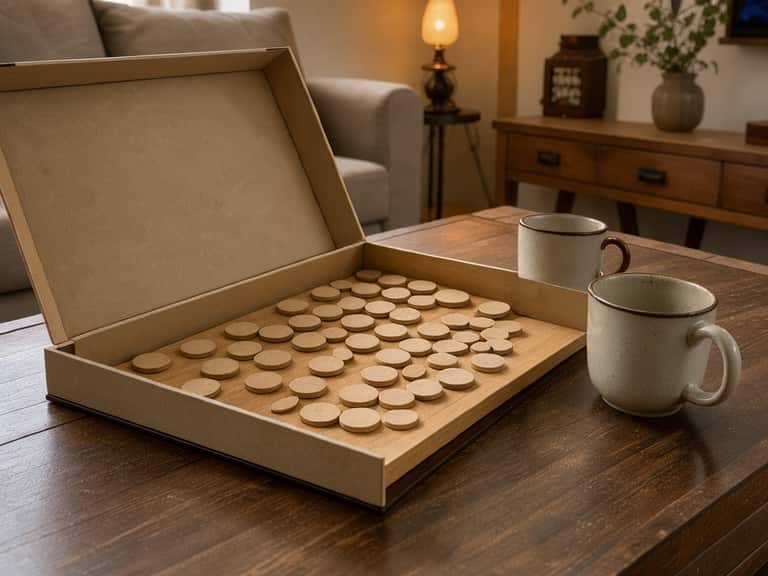
The Couple That Plays Together, Stays Together
Somewhere between the mortgage and the meal planning, many couples quietly stop competing with each other — and not in a good way. They stop challenging each other to a rematch. They stop trash-talking over a card game. They stop keeping score in the fun, meaningless ways that used to make a Tuesday night feel alive.
Game-playing — actual, low-stakes, slightly ridiculous game-playing — is one of the most underrated tools in a long-term relationship. Not because it's a clever trick, but because it creates something genuinely rare: a shared arena where nobody's the parent, nobody's the breadwinner, and nobody's managing the family calendar. You're just two people trying to win at Scrabble, and that simplicity is quietly profound.
Why Games Work on a Neurological Level
Research on positive affect in relationships consistently shows that couples who engage in activities involving novelty, challenge, and mild arousal — think friendly competition, not skydiving — report higher relationship satisfaction over time. Games deliver all three in a tidy package.
When you're genuinely engaged in play, your brain releases dopamine. When that play is shared and social, it tends to also activate the bonding mechanisms tied to oxytocin. In plain language: beating your partner at Uno while they loudly protest the rules is, neurologically speaking, good for your relationship.
There's also something important about witnessing each other in a low-stakes challenge. You see how your partner handles a losing streak. You see them bluff badly at poker. You see them take an embarrassingly long time to answer a trivia question about something they claimed to know everything about. These small revelations keep your image of each other fresh and three-dimensional.
The Problem With Keeping It Casual
Here's a pattern worth noticing: many couples say they "like games" but never actually play them. The deck of cards lives in a drawer. The board game box is dusty. The intention is there, but it never quite materializes.
This happens because play requires a small but deliberate activation energy. It doesn't just happen the way scrolling side-by-side on the couch happens. You have to actually set something up, agree to do it, and follow through — which is exactly why couples who do it regularly tend to treat it like any other intentional relationship investment.
The fix is almost embarrassingly simple: pick one game, put it on the table, and play it this week. Not someday. This week.
How to Make It Actually Fun (Not Forced)
Choose games with the right friction level. Too easy and there's no engagement. Too complex and it becomes a chore. The sweet spot is a game with enough strategy to feel satisfying but not so many rules that one person spends the night confused and frustrated. Classics like Rummikub, Cribbage, Bananagrams, or even a well-loved card game tend to hit that balance.
Build in a small, ridiculous stakes system. The winner picks the next show. The loser does the dishes. The winner gets to be insufferably smug until the next game. Stakes don't have to be meaningful — they just have to make winning feel like something. This small layer of consequence sharpens attention and adds playful drama.
Develop your game-specific banter. Inside jokes that live inside a specific game are a form of relationship culture-building. The phrase that becomes a running gag. The move your partner always makes that you've named. The ritual complaint one of you always makes when they're losing. This is your relationship developing texture, and it happens naturally when you show up to play regularly.
Rotate who chooses the game. If one partner always picks, the other slowly disengages. Taking turns choosing keeps both people genuinely invested, and it occasionally introduces games one of you never would have suggested — which is its own small adventure.
On Winning, Losing, and What Both Reveal
Pay some gentle attention to how competition lands in your relationship. For most couples, a light competitive spirit is connective — it signals engagement, investment, and the fact that you care enough to try. But if one partner consistently sulks in defeat or can't celebrate the other's win without a sting, that's worth a quiet, curious conversation outside the game.
Playful competition should feel like something you're doing together, even when you're technically doing it against each other. The moment the fun evaporates is information — not a crisis, just something worth noticing.
Start Tonight
You don't need a game night setup with snacks and ambiance (though that's lovely if you want it). You need a game and a willingness to be a slightly competitive, possibly petty, completely present version of yourself for an hour.
That version of you — the one who groans at a bad roll and pumps their fist at a comeback — is someone your partner fell for. It's worth letting them see that person regularly.
Pull something out of the drawer. Deal the cards. Make it count.

