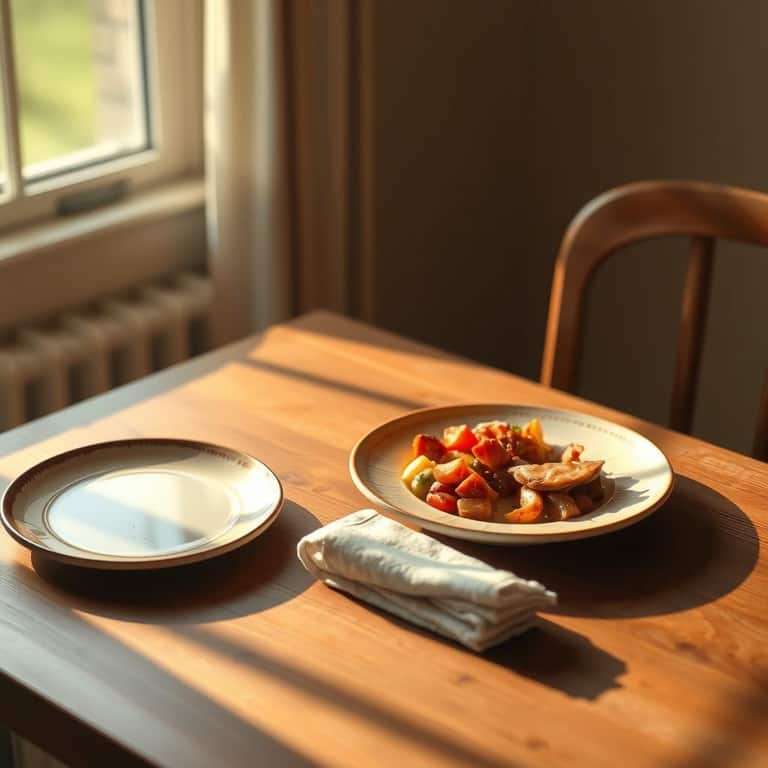
The Table as Common Ground
There's something almost old-fashioned about sitting down to eat together — which might be exactly why it's so easy to let it slide. A meal grabbed separately, eaten over a phone, or rushed between obligations doesn't seem like a big loss. But over time, those small surrenders add up.
Research consistently shows that couples who share regular meals — not just in the same room, but with each other — report higher relationship satisfaction, better communication, and a stronger sense of partnership. The meal itself isn't magic. What it creates is: a predictable, low-pressure moment of togetherness that happens to repeat itself every single day.
Why Eating Together Works
Most of the rituals that hold relationships together share a common trait: they're low-stakes but high-frequency. A shared meal asks almost nothing of you — no deep vulnerability, no conflict resolution, no scheduled quality time. It just asks you to be in the same place, doing the same thing, at the same time.
That simplicity is the point. Psychologists call this passive togetherness — and while it sounds underwhelming, it's one of the quieter glues in long-term relationships. You're not performing closeness. You're just... present. And presence, repeated often enough, becomes intimacy.
There's also a sensory dimension worth noting. Sharing food has deep social roots — across cultures and throughout history, communal eating signals safety, belonging, and trust. Your nervous system still responds to it. Sitting across from your partner over dinner, even a simple one, sends a signal that reads something like: this is my person, and we are okay.
Making It Count Without Making It Complicated
You don't need candles and a three-course meal. The research doesn't require romance — it requires regularity and a few small intentions.
Put phones face-down. Not as a rule you enforce on each other, but as a shared agreement. Even ten minutes of undivided attention over food is more connecting than an hour of half-presence.
Let one meal a day be the one. If morning chaos makes breakfast impossible and you're both too tired by dinner, lunch might be your window. Find the meal that realistically works for your lives and protect it. Consistency matters more than which meal you choose.
Keep one topic off the table — literally. Many couples find that logistics drift into every conversation: schedules, finances, what needs to be fixed around the house. Designate your shared meal as a no-logistics zone when you can. Talk about something you read, something that made you laugh, something you've been thinking about. Mundane is fine. Administrative is different.
Cook something together occasionally. Even occasionally matters. The collaboration of preparing a meal — the small negotiations, the physical proximity, the shared task — primes you for the connection that follows. It doesn't have to be elaborate. Scrambled eggs counts.
When Life Makes It Hard
Different work schedules, kids, long commutes, varying appetites — there are a hundred real reasons shared meals don't always happen. This isn't about guilt. It's about noticing when the pattern has slipped and deciding, together, whether you want to reclaim it.
If you can't eat at the same time, sitting with your partner while they eat — with your own cup of tea or a small snack — still preserves the ritual. The structure of the moment matters almost as much as the eating itself.
Some couples find that one protected weekly meal — a Sunday breakfast, a Friday dinner — does more for their connection than sporadic daily attempts. If daily feels impossible, anchor on one. Make it consistent enough that you'd both notice if it disappeared.
The Bigger Picture
What you're really doing, when you prioritize sharing a meal, is building a rhythm your relationship can rely on. Long-term couples often describe their rituals not as things they do for romance, but as things that help them feel like a team — like two people moving through life with some coordination and intention.
Shared meals are one of the oldest and most natural forms of that coordination. They don't require you to be in a good mood, to have anything profound to say, or to solve anything between you. They just require you to show up to the same table.
Over months and years, that showing up accumulates into something that's hard to name but easy to feel: the sense that you have a life together, not just two lives running in parallel.
Start small. Pick a meal. Put the phone down. That's enough.

