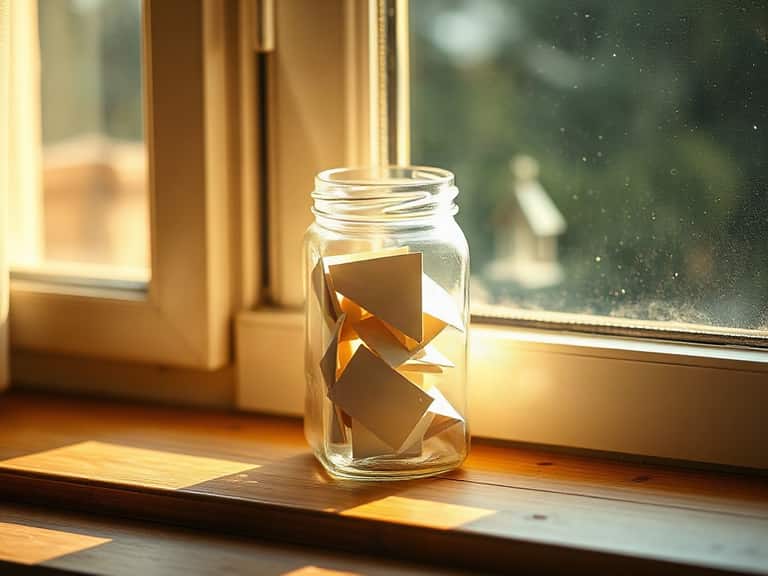
The Jar You're Always Filling
Here's something researchers have noticed about gratitude in long-term relationships: it doesn't tend to arrive in one big rush. It accumulates. Or it doesn't — and then one day you look up and realize you've been running on empty for a while without quite knowing why.
The couples who seem to sustain genuine warmth over years aren't usually the ones making grand romantic gestures every weekend. They're the ones who've quietly learned to collect the small stuff — to notice, hold, and return to the tiny moments of appreciation that most of us let slip by unregistered.
This article is about that collection habit. Not what you say, or how you say it, or when — but the upstream practice of actually gathering the moments worth expressing in the first place.
Why Small Moments Escape Us
The brain is efficient, which means it's also a little ruthless. Anything that happens reliably tends to get filed under background noise rather than worth noticing. Your partner makes coffee every morning. They lock up before bed. They ask how your meeting went. These things happen, and because they happen, they start to disappear.
Psychologists call this hedonic adaptation — the process by which good things gradually stop feeling good simply because they've become familiar. It's not ingratitude, exactly. It's just how attention works. The brain moves on.
The practical consequence is that you can genuinely love someone and still fail to notice — day after day — the dozens of small things they do that make your life easier, warmer, or more functional. And when you stop noticing, you stop feeling grateful. And when you stop feeling grateful, something subtle but important starts to erode.
The fix isn't dramatic. But it does require a small, intentional habit.
The Practice: A Running Mental Tally
Think of it as keeping a running appreciation tally — an informal, internal list of small things your partner does that you want to register, even briefly, before they disappear.
This isn't about journaling or structured exercises (though those can help). It's simpler than that. It's about building a micro-habit of pausing for just a second when something small happens — a kindness, a competence, a moment of patience — and consciously marking it.
How this looks in practice:
Your partner handles a difficult phone call you were dreading. Instead of immediately moving on to the next thing, you take one breath and think: That mattered. I want to remember that.
They let you pick the show without making a face about it. Small, right? But you notice it. You mentally file it.
They remember that you had a hard day and ask about it later, when you've mostly forgotten they even knew.
None of these are headline moments. But each one is real. And the practice of marking them — even silently — keeps them from dissolving into the background hum of daily life.
Why Collecting Matters Before Expressing
Here's the thing about expressing gratitude: it can only be as rich as what you've actually noticed. If you're running on an empty appreciation tank, even a well-timed, specific thank-you can feel a little hollow — to you, and sometimes to your partner.
But when you've been quietly collecting? When you've genuinely been paying attention? The gratitude that comes out feels different. It has weight and texture because it's drawing from a full source rather than scrambling to produce something on demand.
This is why the collection habit matters as its own practice, separate from expression. It's the upstream work that makes everything downstream more genuine.
A Simple Way to Start
If you want to build this habit, try anchoring it to something you already do.
Choose a moment in your day — maybe when you're brushing your teeth at night, or making your commute home — and ask yourself one quiet question: What did my partner do today that I almost didn't notice?
Not what was impressive. Not what was romantic. Just what was real and quiet and easy to overlook.
Some days you'll come up with three things. Some days maybe one. That's fine. The point isn't volume — it's the habit of looking. Over time, the looking gets easier, and then it starts happening automatically, throughout the day rather than just at the end of it.
What Shifts Over Time
Couples who practice this kind of active noticing often report something unexpected: they start to feel more appreciative without even consciously trying to. The tally becomes a lens. You're not forcing gratitude — you're just making sure the good stuff doesn't become invisible.
And here's the quiet gift in that: your partner doesn't have to do anything different. Nothing in your relationship has to change. You just stop letting so much of it go unregistered.
That's a small shift with a surprisingly large return.

